

Steam inhalation with essential oils is one of aromatherapy's most traditional methods, putting aromatic molecules in direct contact with the ENT sphere.
Simple and easy, it calls for just a few precautions, including water temperature, essential oil quantity, & choice of essences. This guide covers what actually happens during inhalation, the two best techniques, the quantities to use, and the essential oils to avoid.
How does steam inhalation work?
An essential oil is a blend of volatile molecules. Gently heated, it releases these compounds into the surrounding air, which the water vapor then carries to the nasal passages, sinuses and pharynx. Contact happens directly on the respiratory mucosa, with no digestive or skin absorption involved.
Two biochemical families dominate the essential oils used this way. Terpene oxides, including 1,8-cineole, act on the fluidity of secretions while soothing the feeling of a blocked nose. Monoterpenols, such as linalool or terpinen-4-ol, bring a cleansing action to the ENT sphere. The hot steam itself rehydrates mucous membranes dried out by heating and winter's dry air, which is an essential part of clearing mucus.
Respiratory mucous membranes are lined with tiny cilia that constantly help clear mucus toward the throat. When the air is too dry, secretions can thicken and become harder to clear, which can increase the feeling of a blocked nose.
Steam inhalation temporarily brings moisture back to the airways and supports better comfort. Essential oils then contribute their aromatic properties, provided they are chosen and used appropriately.
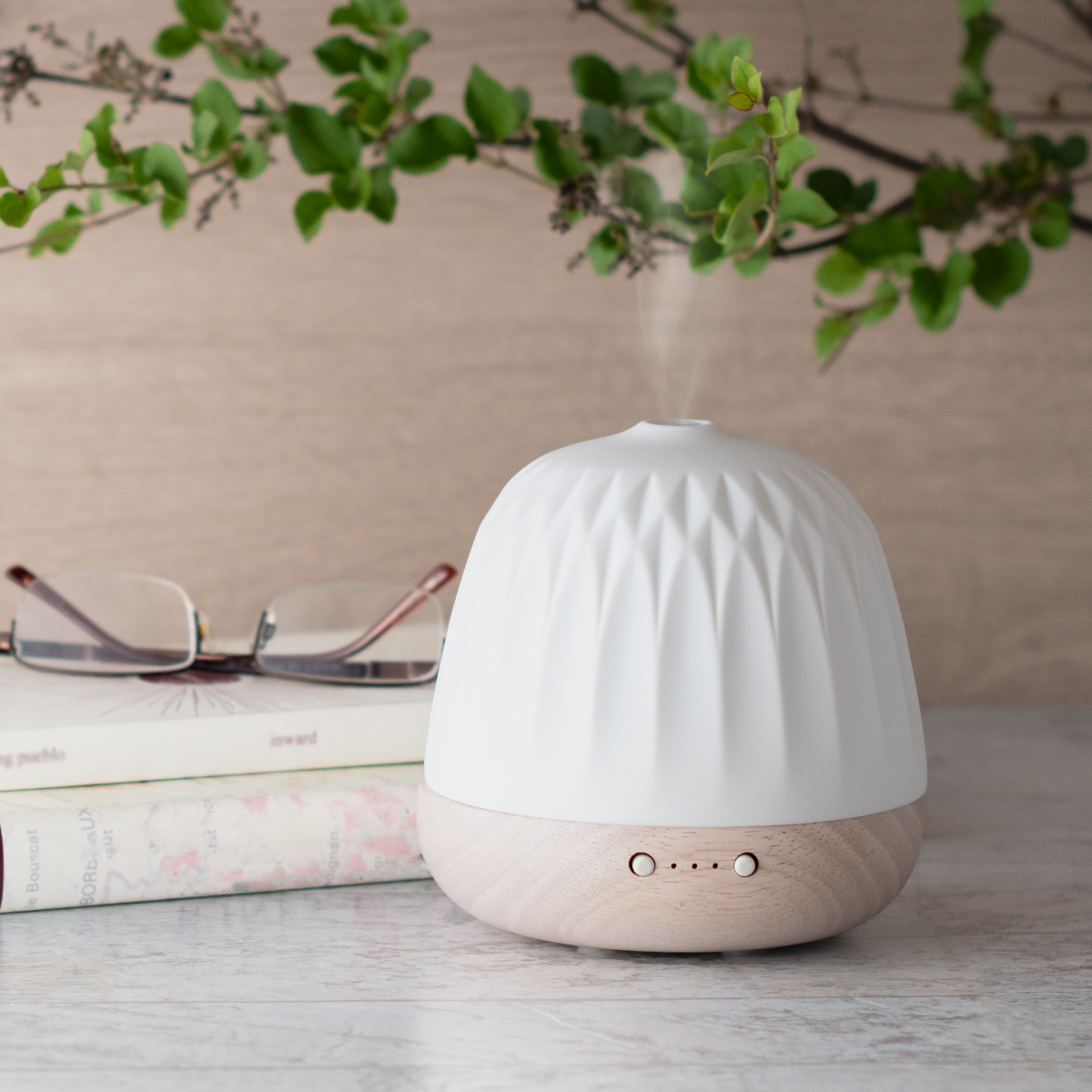
This double action, physical and biochemical, is what sets steam inhalation apart from simple atmospheric diffusion. A diffuser spreads molecules throughout your spaces, at low concentrations, to purify the air. Inhalation concentrates them on a single person for a few minutes. The two methods share neither the same goal nor the same precautions.
Is inhaling without essential oils worth it?
Yes, and actually a great option when essential oils are ruled out, as in the case of young children or during pregnancy. Water vapor alone acts on the thickness of mucus, with no aromatic molecules involved. A hydrosol, obtained by distilling fresh plants, is the logical middle ground: a tablespoon of peppermint hydrosol in a bowl of hot water brings a fraction of the aromatic compounds, at a concentration well below that of an essential oil. Rinsing the nose with saline or seawater completes the session: it essentially clears what the steam has loosened. None of these three options carries the strength of an aromatic inhalation, but they apply when one is contraindicated.
Steam inhalation vs dry inhalation: two different methods
Bowl or inhaler: the steam method
The steam method combines essential oil with hot water. It is done leaning over a bowl with the head covered with a towel, or through a glass or ceramic inhaler that channels the steam toward the nose and mouth. The inhaler offers two measurable advantages: it stops molecules escaping into the room, and it protects the eyes from watering up thanks to the menthol or cineole vapors.
Great for a blocked nose, feelings of sinus pressure, or discomfort in the pharynx, you'll want to do this method somewhere you can sit and relax for 5-10 minutes.
Tissue or stick: the dry method
The dry method is done without water. One or two drops on a paper tissue, breathed in from a few centimeters away, are enough for a quick, refreshing effect. The inhaler stick works on the same principle, with a resealable, portable wick soaked in oil.
For palm inhalation, simply place a drop of essential oil in one of your palms, then gently rub together to release the scent molecules. Cup hands lightly near the nose, and breathe in and out slowly 5 times.
All three of these methods are useful at home, at the office, or while traveling. With no hot steam involved, these are also good options for people with asthma, for whom warm humidity can trigger bronchospasm. In exchange, the effect on thick secretions stays weaker than with the bowl, since rehydration is not part of the equation.
The best essential oils for inhalation
Eucalyptus radiata, for the sensation of a blocked nose
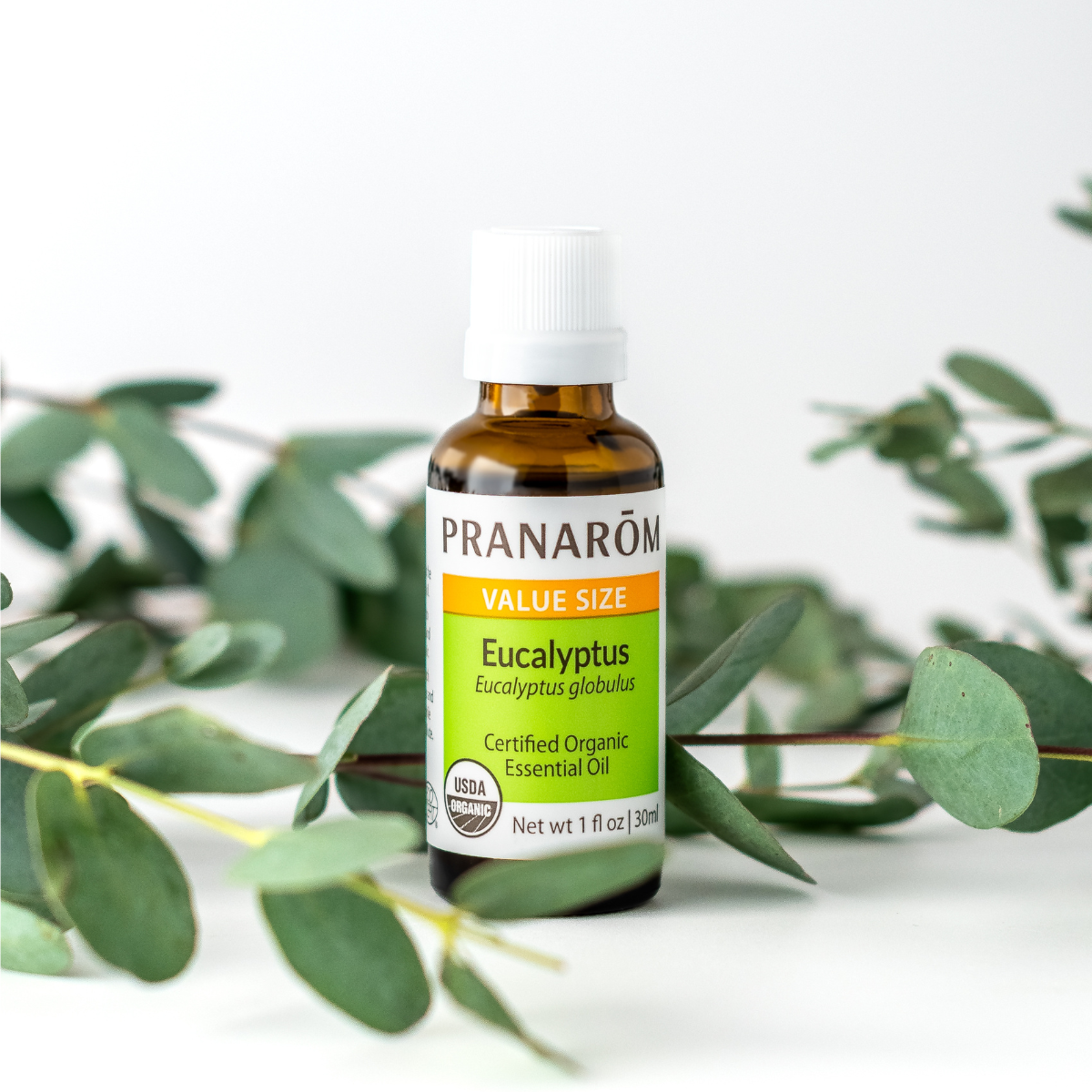
Eucalyptus radiata essential oil owes its reputation to its high 1,8-cineole content. It is the most documented oil for the upper airways and the best tolerated of the eucalyptus family, which explains why it is commonly found in inhalation formulas. Its cousin, Eucalyptus globulus, is more concentrated and more irritating: it suits adults with no sensitive respiratory terrain, & is not recommended for young children.
Peppermint, fast-acting & refreshing
The menthol in peppermint essential oil delivers the most noticeable "clearing" sensation, thanks to menthol's action on the nasal mucosa's cold receptors. This feeling is real, but it does not measure actual decongestion: it often precedes it.
Ravintsara & Scotch Pine: the gentle alternatives
Ravintsara shares Eucalyptus radiata's richness in 1,8-cineole, with a gentler scent profile, useful when the smell of eucalyptus is off-putting. Scotch Pine, dominated by monoterpenes, targets bronchial comfort more than the nose.
The choice depends on what symptoms you're looking to soothe. A blocked nose calls for 1,8-cineole, so Eucalyptus radiata or Ravintsara are your best options. Discomfort that has moved down to the bronchi points toward Scotch Pine. Throat irritation responds better to other routes than inhalation, since the steam mainly reaches the upper airways. Try our Throat Spray or Essential Syrup instead.
Tip: When making your own blend, two combined essential oils are enough in most cases: stacking four or five oils in a bowl multiplies the risk of irritation without adding any benefit.
Equipment, dosage, duration: the precise method
Equipment and water temperature
All you need is a heat-resistant bowl or an inhaler, a towel, and steaming (not boiling) water. Temperature is the parameter most often overlooked, and yet it is what decides the result. Boiling water burns the nasal mucosa and breaks down the most volatile aromatic molecules before they reach the nose. Aim for simmering water, taken off the heat and left uncovered for a minute before adding the essential oil.
How many drops of essential oil should I be using?
The reference adult dosage is 2 to 3 drops of essential oil in a bowl of hot water, or 1 drop for Peppermint. For the dry method, use 1 to 2 drops on a tissue or your personal inhaler. These quantities are not to be increased: beyond them, the concentration in the steam irritates the eyes and throat without any respiratory comfort benefits.
How long should I be inhaling essential oils?
A session should last 5 to 10 minutes, with your eyes closed, and slow breaths through the nose. We recommend 2 sessions a day, once in the morning and evening, for 5 days. After each session, stay indoors for at least 30 minutes: the mucous membranes are dilated and moist, and a direct step into the cold cancels out the session's benefits. If the discomfort persists after 5 days, or if fever appears, seeking medical advice is recommended.
DIY Sinus Support Blend
For adults, combine 2 drops of Eucalyptus radiata essential oil and 1 drop of Ravintsara essential oil in a bowl of simmering water taken off the heat, for 8 minutes, twice a day. Proportions and the number of sessions should be adapted by a pharmacist or aromatherapist in case of ongoing treatment or a particular respiratory ailment.
Our ready-to-use inhalation solutions skip the manual dosing step, with quantities already calibrated. For a targeted gesture on a blocked nose, our DIY inhalation recipe gives the full blend and its proportions.
Which essential oils shouldn't be inhaled?
Three biochemical families are to be ruled out from this route, and the reason is the same every time: the respiratory mucosa is far more fragile than the skin.
Phenol-rich essential oils come first. Thyme Thymol, Oregano and Winter Savory are dermocaustic; on nasal mucosa, even heavily diluted in steam, they cause burning. Their cleansing power is not in question, but it belongs to other routes, under guidance.
Next come the neurotoxic ketone essential oils, including Hyssop. These are reserved for prescription by a professional trained in aromatherapy and have no place in a home practice.
Terpene aldehyde essential oils close the list. Lemon-scented Litsea and Citronella irritate the mucous membranes, despite a scent that makes them seem harmless. Wintergreen belongs here too, since its methyl salicylate is meant for topical use on muscles & joints, along with citrus essences, obtained by expressing the peel: pleasant to smell, but of no help with feelings of congestion.
When should I avoid inhalation?
Before age 6, steam inhalation with essential oils should be avoided: the withdrawal reflex against hot steam is not reliable, the risk of burns is real, and certain molecules expose young children to laryngeal spasm.
Peppermint is contraindicated for children, during pregnancy and breastfeeding, and for people with epilepsy. It is the essential oil most often mentioned for a blocked nose, and the one whose contraindications are most often forgotten.
During pregnancy and breastfeeding, consult with your health practitioner before any inhalation, whatever the essential oil. In case of asthma, the steam method is ruled out in favor of the dry method, and a doctor's agreement remains the first step.
One safety tip worth knowing before any inhalation: in case of accidental eye contact with an essential oil, it is important to act quickly and follow the appropriate recommendations. Since essential oils do not mix with water, a fatty oil like coconut, olive or jojoba can help remove residue.
As a precaution, always keep a fatty oil within reach during the session and, in case of eye contact, seek advice from a healthcare professional or a poison control center.
As for upkeep, an inhaler is rinsed with hot soapy water after each use, then air-dried. Essential oils leave a residual film that oxidizes within days, changes smell and becomes more irritating than the fresh oil. An inhaler with a stale smell should be replaced.
One last tip, useful for everyone: smell the essential oil straight from the bottle before pouring it. A scent that is unpleasant from the bottle will become even more unpleasant in steam inhalation.